Last updated October 15, 2026
DIY vs Professional ADU: The Santa Clarita Homeowner’s Decision Guide
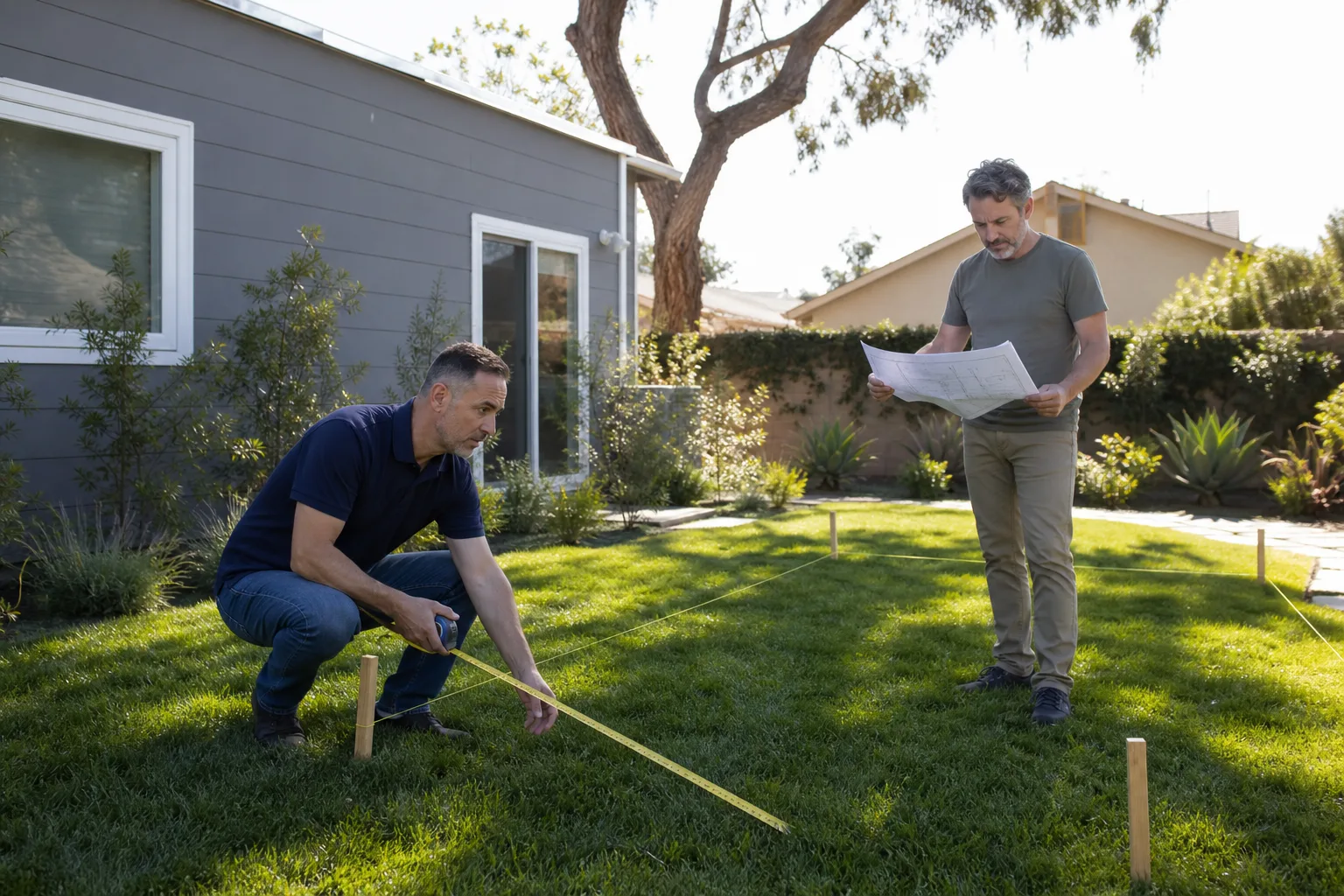
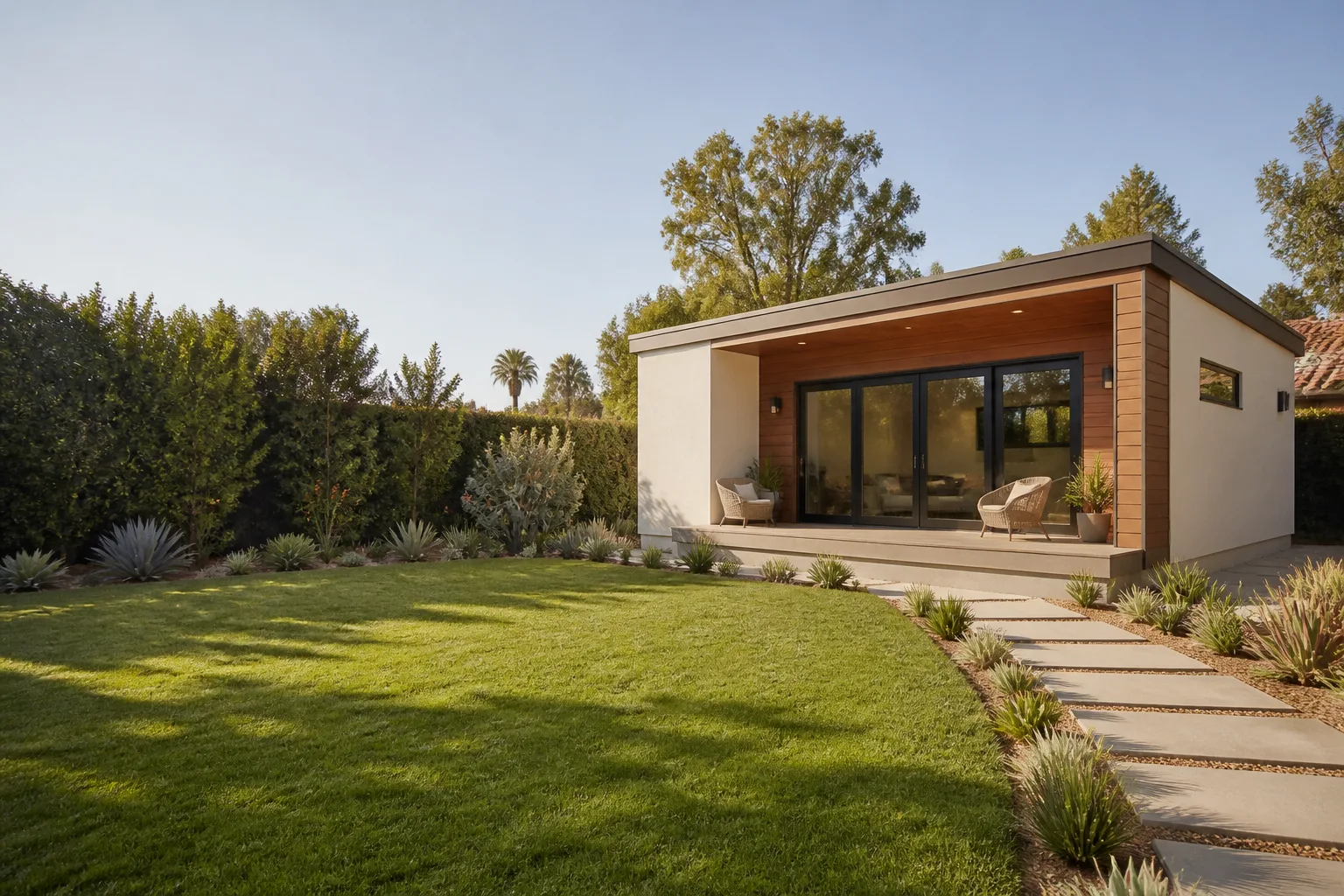
Here’s a number most homeowners never hear until it’s too late: California requires you to disclose owner-builder work to any buyer for a full decade after the project is done. That means the $40,000 you saved doing it yourself in Santa Clarita can come back as a $60,000 price concession when you sell. This guide walks through the real legal lines, the honest cost math, and the specific places where DIY actually makes sense – and the places where it creates liability that outweighs every dollar saved. For additional reading, see our ADU Builders Maintenance Checklist for Santa Clarita Homeowners.
Quick Answer
DIY makes financial sense for an ADU in Santa Clarita only on finish work: painting, trim, landscaping, and interior carpentry. The structural, electrical, plumbing, and energy compliance scopes legally require licensed subcontractors even under an owner-builder permit, and the 10-year disclosure obligation means unpermitted or flawed work follows the property title until 2035. A professional build costs more upfront but closes faster, passes inspection the first time, and doesn’t saddle you with a decade of seller liability. If you’re weighing the contractor route, read How to Hire a ADU Contractor in Santa Clarita: A Step-by-Step Guide.
Table of Contents
- The Legal Reality: What an Owner-Builder Permit Actually Lets You Do
- The 10-Year Disclosure Rule Nobody Explains
- Real Cost Math: DIY Savings vs. Hidden Expenses on a 600 Sq Ft ADU
- Three Places DIY Genuinely Makes Sense
- Four Scopes Where DIY Creates More Liability Than Savings
- How Prefab Brands Like Boxabl and Plant Prefab Change the DIY Calculus
- Project Timeline: DIY vs. Professional, With the Rental Income Named in Dollars
- Common Mistakes to Avoid
- When to Call a Professional
- Frequently Asked Questions
- The Bottom Line
The Legal Reality: What an Owner-Builder Permit Actually Lets You Do
California’s owner-builder permit exists for a specific reason: a homeowner who lives on the property can act as their own general contractor and pull permits for work on that property. The state allows this because owner-occupied projects carry a built-in quality incentive – you’re building for yourself, not flipping for profit. But the permit restricts what you can perform with your own hands versus what must go through a licensed contractor.
Here’s the distinction most guides miss: under an owner-builder permit, you can self-perform non-structural finish work. Drywall, painting, flooring, trim, cabinetry installation, and landscaping all fall into this category. You can also act as the general contractor who hires and coordinates licensed subcontractors for the trade work.
What you cannot legally self-perform, even with an owner-builder permit:
- Electrical work – California requires a C-10 electrical contractor license for any panel work, wiring, or circuit installation. No exception exists for owner-builders on new ADU construction.
- Plumbing – A C-36 plumbing license is required for drain lines, supply lines, gas connections, and water heater installation.
- Structural framing – Any load-bearing wall, beam, roof structure, or foundation work requires engineering sign-off and, in practice, a licensed framing crew.
- HVAC installation – A C-20 license covers heating, ventilation, and air conditioning work, including mini-split systems.
- Energy compliance – California’s Title 24 energy standards require HERS verification from a certified third-party rater, which means the work must be done to a standard that passes independent testing.
In Santa Clarita, the building department enforces these distinctions with field inspections. We’ve watched homeowners show up to an electrical rough-in inspection with work they did themselves, only to get a stop-work order and a correction notice requiring a licensed contractor to pull a separate permit and redo the work. The inspection fee you paid doesn’t carry over to the correction permit.
What this means in practice: the owner-builder path saves you the general contractor markup (typically 15-20% on a Santa Clarita ADU project), but it doesn’t save you the cost of licensed subcontractors on any trade scope. Most first-time owner-builders don’t discover this until the first failed inspection.
If you’re still weighing the owner-builder route, start with a conversation with a professional ADU builder in Santa Clarita who can walk you through the actual permit requirements before you commit to a path.
The 10-Year Disclosure Rule Nobody Explains
California Civil Code Section 1102 mandates that any property seller disclose material facts about the property’s condition and history. Here’s the specific language that matters for ADU builders: if you pulled an owner-builder permit, you must disclose that status to any buyer for 10 years from the date the work was completed. Not the date you sell. The date the work was done.
So if you finish your DIY ADU in 2026 and sell in 2034, you’re disclosing. If you sell in 2032, you’re disclosing. The disclosure form asks specifically whether the property includes any work performed under an owner-builder permit, and the answer becomes part of the title package that every prospective buyer reviews.
What does that disclosure do to a sale?
- Buyers and their agents treat owner-built additions with more scrutiny, requesting additional inspection contingencies and longer due diligence periods.
- Lenders may require a structural engineer’s certification for owner-built work before approving financing on the property.
- In competitive markets, an owner-built ADU is a negotiation point. A buyer who finds the disclosure at closing can demand a price reduction or repair credit.
- Insurance carriers may flag owner-built additions for higher premiums or exclude them from coverage until a licensed inspector signs off.
We’ve talked to Santa Clarita homeowners who saved $30,000 to $50,000 on a DIY ADU and then lost $40,000 to $80,000 at resale because the disclosure scared off early offers or became a closing-table concession. The savings math has to survive contact with the resale market, not just the construction budget.
There’s no creative workaround here. The disclosure question appears on the standard California Residential Purchase Agreement, and lying on the form is fraud with real legal consequence. If you pull the owner-builder permit, assume the disclosure happens, and factor that into your decision.
Real Cost Math: DIY Savings vs. Hidden Expenses on a 600 Sq Ft ADU
Let’s put actual numbers on the table for a 600 square foot one-bedroom ADU in Santa Clarita. These are working ranges based on 2025-2026 material and labor costs in the Los Angeles County market, not national averages.
Professional Build: The Baseline
A site-built 600 sq ft ADU in Santa Clarita, built by a licensed general contractor, typically runs $240,000 to $330,000 all-in. That includes permits, engineering, materials, labor, and the general contractor’s overhead. A prefab ADU from a manufacturer like Boxabl or Plant Prefab can land between $180,000 and $260,000 depending on the model and site conditions, plus site work and foundation costs.
DIY Owner-Builder: The Paper Savings
An owner-builder can expect to save the general contractor markup, which on a $300,000 project is roughly $45,000 to $60,000. That’s real money, and it’s the number most DIY calculators show you.
The Hidden Costs Most Calculators Miss
| Expense Category | Typical Range | Notes |
|---|---|---|
| Tool and equipment rental | $3,500 – $8,000 | Framing nailers, concrete mixers, drywall lifts, laser levels |
| Material waste from first-time errors | $6,000 – $15,000 | First-time builders average 15-25% waste vs. 7-10% for pros |
| Failed inspection corrections | $4,000 – $25,000 | Each failed inspection means rework, new materials, and another inspection fee |
| Extended permit timelines | $1,500 – $4,000 | Plan check resubmissions and deadline extension fees |
| Your own labor at real value | $25,000 – $60,000 | 600 sq ft takes 800-1,200 working hours even for experienced DIYers |
When you total the hidden line items against the markup savings, the realistic DIY net savings on a Santa Clarita ADU is $10,000 to $25,000. Not nothing. But nowhere near the $50,000 the brochure math suggests. And that’s before accounting for the 10-year disclosure obligation and the resale risk.
A licensed home addition contractor in Santa Clarita typically delivers the project at a fixed price with the trade coordination baked in, which eliminates most of the hidden-cost categories above.
Three Places DIY Genuinely Makes Sense
Not everything about a DIY ADU is a trap. There are real, legal, inspection-safe places where doing the work yourself saves meaningful money without creating liability. Here’s where we’ve seen Santa Clarita homeowners do their own work successfully.
1. Finish Carpentry and Interior Trim
Baseboards, door casings, windowsills, and closet shelving are fair game for an owner-builder. This work sits on top of the permitted structure, doesn’t affect structural integrity, and won’t trigger an inspection failure if it’s imperfect. A homeowner who takes their time with a miter saw and a finish nailer can save $4,000 to $7,000 on a 600 sq ft unit.
2. Interior and Exterior Painting
Painting is the most accessible DIY scope. It’s visible work, but it’s entirely cosmetic, and the materials cost is a fraction of the labor you’d pay a painting contractor. Plan for $1,800 to $3,500 in paint and supplies versus $6,000 to $9,000 for professional painting on an ADU this size. Rent a professional-grade sprayer for the exterior.
3. Landscaping and Site Finishing
The area around the ADU – gravel paths, drought-tolerant plantings, mulch, simple paver walks – is fully within a homeowner’s rights. Santa Clarita’s climate makes this scope especially attractive because drought-tolerant native plantings require less ongoing irrigation. For tips on keeping your ADU in top shape year-round, check out our Seasonal ADU Care for Santa Clarita: Year-Round Homeowner’s Guide. Expect to save $3,000 to $6,000 versus a landscape contractor for equivalent scope.
These three scopes total roughly $10,000 to $16,000 in realistic savings, and they carry zero disclosure liability because they’re either cosmetic or part of the finished property’s normal curb appeal. If you want to put sweat equity into your ADU, this is where to put it.
Four Scopes Where DIY Creates More Liability Than Savings
These are the places we’ve seen DIY projects go sideways in Santa Clarita, and the common thread is that each one involves work that’s either legally restricted, structurally consequential, or both.
1. Electrical: Panels, Wiring, and Circuits
California’s C-10 license requirement applies to all electrical work on new ADU construction. There is no owner-builder exception for running Romex through your own walls. If a homeowner does the electrical work anyway, the building inspector will catch it at rough-in, the correction requires a licensed electrician to pull a new permit and redo the work, and in some cases the inspector can require opening walls that were already closed. The saved labor disappears into double work and double permit fees.
2. Plumbing: Supply Lines, Drains, and Gas
Same licensing wall applies. A C-36 plumber must handle the water supply, drain-waste-vent system, and any gas line for the ADU’s appliances. Beyond the license requirement, plumbing errors don’t show up immediately. A slow drain leak inside a wall can go unnoticed for months, and by the time it surfaces, the repair requires cutting into finished surfaces. On a rental ADU, that’s tenant disruption and a habitability complaint.
3. Structural Framing and Foundation
The ADU’s structural frame carries engineering loads that were calculated by a licensed structural engineer. Field framing to those specs requires knowledge of nailing schedules, hold-down placement, and shear wall requirements. Errors here aren’t just inspection failures – they’re safety failures. California’s seismic code applies to every ADU in Santa Clarita, and a framing error that passes visual inspection can still fail during an earthquake.
4. Title 24 Energy Compliance
California’s Title 24 energy code requires every new ADU to meet specific insulation, window, and HVAC efficiency standards, verified by a third-party HERS rater. If the HERS rater finds the envelope or mechanical systems out of compliance, the correction typically means opening walls or replacing equipment. This is the scope where we see even experienced DIYers fail because the standard is technical and the testing equipment isn’t something you can rent at Home Depot.
The common thread across all four scopes: the cost of a correction after a failed inspection or compliance failure exceeds what you saved by doing the work yourself. The math doesn’t work, and the legal exposure doesn’t either.
How Prefab Brands Like Boxabl and Plant Prefab Change the DIY Calculus
Prefab ADUs reshape the DIY conversation in a specific way: the factory does the dangerous or difficult work in a controlled environment, and the site work shrinks. But prefab isn’t a pass to skip permits or do everything yourself. Here’s what actually changes.
Boxabl manufactures foldable ADU modules that arrive on a truck and unfold on site. The factory assembles the walls, roof, and mechanical rough-in to California code, and the module carries factory certification. But the site work – foundation, utility connections, anchoring – still requires licensed trades. Boxabl’s installation documentation is explicit about which site tasks must be performed by licensed contractors to maintain warranty coverage. A homeowner who self-installs the utility hookups and runs into an electrical issue six months later may find the warranty voided for that scope.
Plant Prefab takes a panelized approach: factory-built wall panels and modules assembled on site by a crew. Their warranty similarly requires installation by authorized or licensed crews. Plant Prefab’s California presence means their modules are built to state energy codes from the factory, which simplifies the Title 24 compliance piece substantially.
Tuff Shed occupies a different category. Tuff Shed’s structures are pre-engineered and can serve as a shell for an ADU conversion, but a Tuff Shed alone doesn’t meet California’s ADU definition without substantial site-built work – insulation, electrical, plumbing, and finishes. Tuff Shed’s warranty covers the shell against manufacturer defects, not the conversion work done by the owner.
Here’s the key point for a Santa Clarita homeowner weighing prefab versus site-built: prefab reduces the amount of site labor required, which means fewer opportunities for DIY errors in framing and enclosure. But the site work that remains – foundation, utilities, energy systems – is precisely the scope that requires licensed professionals under California law. Prefab doesn’t turn a restricted scope into an owner-builder scope. It shrinks the job, not the rules.
The pragmatic move is to treat a prefab ADU the same way you’d treat a site-built one for permitting purposes: pull the permit, hire the licensed subs for restricted scopes, and save your DIY energy for finishes and landscaping.
Project Timeline: DIY vs. Professional, With the Rental Income Named in Dollars
Time is a cost, and on an ADU in Santa Clarita, time is measured in rent you’re not collecting. A one-bedroom ADU in Santa Clarita rents for approximately $1,800 to $2,400 per month depending on the neighborhood and finish level. Every month of delay is $1,800 to $2,400 in lost income.
The DIY Timeline: 18 to 24 Months
- Months 1-3: Learning the permit process, drafting or acquiring plans, plan check rounds with the city. First-time owner-builders typically take twice as long on plan check as an experienced contractor who has submitted hundreds of packages.
- Months 4-6: Foundation and site work. Coordinating concrete contractors, scheduling inspections, managing weather delays.
- Months 7-12: Framing, roofing, and enclosure. This is where the learning curve hits hardest: first-time framers work at one-third the speed of a professional crew.
- Months 13-18: Mechanical rough-in (hiring and coordinating licensed subs), insulation, drywall, finishes. Each trade’s schedule depends on your availability as the GC.
- Months 19-24: Final inspections, corrections, certificate of occupancy. First-time owner-builder projects average two to three failed inspections before pass.
The Professional Timeline: 8 to 12 Months
- Months 1-2: Permit submission and plan check. A contractor who builds ADUs in Santa Clarita regularly has plan sets that have passed similar reviews, and knows which details the city’s reviewers look for.
- Months 3-4: Foundation and site work, with the concrete trade already scheduled and sequenced.
- Months 5-7: Framing, roofing, enclosure, and mechanical rough-in happening in parallel with a coordinated crew.
- Months 8-10: Finishes, trim, paint, and final inspections. Most professional builds pass final inspection with zero or one correction item.
- Months 11-12: Certificate of occupancy issued and the unit is rent-ready.
The rental income math: a 12-month professional build starts generating rent at month 12. A 22-month DIY build starts generating rent at month 22. Those 10 months of delay represent $18,000 to $24,000 in lost rental income. That number alone wipes out most or all of the realistic DIY net savings we calculated earlier.
Common Mistakes to Avoid
- Assuming the owner-builder permit lets you do electrical and plumbing. It doesn’t. California license requirements apply regardless of permit type, and inspectors in Santa Clarita enforce them.
- Budgeting retail material costs and skipping waste. First-time builders waste 15-25% of materials on measurement errors, miscuts, and rework. The professional standard is under 10%.
- Ignoring the 10-year disclosure obligation. The owner-builder disclosure follows the property, not you personally. The buyer’s agent will find it and use it in negotiation.
- Planning the timeline around YouTube tutorials. A 20-minute video doesn’t capture the 30 hours of trial and error behind it. Real-world DIY ADU builds in Santa Clarita run 18 months minimum.
- Buying a prefab shell and assuming the warranty covers your conversion work. It doesn’t. Warranty coverage follows the manufacturer’s installation requirements, which typically mandate licensed trades for utility connections.
- Skipping Title 24 planning until the final inspection. By then, the corrections usually require opening walls. HERS testing is not pass-fail friendly to retroactive fixes.
- Not factoring the rental income loss into the DIY savings math. A 10-month longer timeline at $1,800 to $2,400 per month in Santa Clarita rent erases most DIY savings before you ever list the property.
When to Call a Professional
If your ADU plan includes any of these scenarios, the DIY savings don’t survive contact with reality: you need the rental income flowing within a year, you have no experience coordinating subcontractors, the ADU site has grading or foundation challenges, or you want a clean title when you sell. Benson ADU Santa Clarita home offers free estimates for homeowners weighing the professional path against the owner-builder route. We’ve built ADUs and room additions across Santa Clarita with the trade coordination, permitting experience, and fixed pricing that eliminates the hidden costs above. Call (661) 219-7906 to schedule a free estimate and get a written price before any work begins.
Frequently Asked Questions
You can legally act as your own general contractor under an owner-builder permit for work on your own property, but California license laws still require licensed subcontractors for electrical, plumbing, HVAC, and structural work. Browse more guides & resources for Santa Clarita ADU owners. You can self-perform finish carpentry, painting, drywall, flooring, and landscaping. The owner-builder path also carries a 10-year disclosure obligation when you sell the property. Call (661) 219-7906 for a realistic assessment of which scopes make sense to self-perform.
A realistic net savings for a 600 sq ft ADU in Santa Clarita after tool rental, material waste, failed inspection corrections, and the value of your own labor is $10,000 to $25,000. The gross savings from eliminating the general contractor markup looks like $45,000 to $60,000 on paper, but the hidden costs eat most of it. The calculation also has to factor in rental income lost to a longer build timeline, which is typically $18,000 to $24,000.
No. Boxabl and similar prefab manufacturers require site work – foundation, utility connections, and anchoring – to be performed by licensed contractors to maintain warranty coverage. The factory builds the module to code, but the site installation is not a homeowner scope. A homeowner who self-installs utility hookups may void the warranty for any related failure.
A DIY owner-builder ADU in Santa Clarita typically takes 18 to 24 months from permit application to certificate of occupancy. A professional contractor on the same project typically delivers in 8 to 12 months. The 10-month difference costs $18,000 to $24,000 in lost rental income at current Santa Clarita rental rates.
Unpermitted work must be disclosed on the California Residential Purchase Agreement, and it gives buyers grounds to demand a price reduction, require a licensed engineer’s certification, or back out of the sale entirely. In Santa Clarita, the building department can also issue retroactive permits that require opening finished work for inspection. Unpermitted electrical or plumbing work can become the basis for an insurance claim denial if something fails later.
Yes. We provide a free, written estimate with a fixed price for the full ADU scope, so you can compare the real professional number against your DIY budget and make the call with actual data instead of estimates. Call (661) 219-7906 to schedule – a live person answers.
The Bottom Line
The DIY versus professional ADU decision in Santa Clarita comes down to three numbers: the $10,000 to $25,000 you can realistically save after hidden costs, the $18,000 to $24,000 you’ll lose in rental income to a longer timeline, and the unknown sum a decade of disclosure liability will cost you at resale. The math tilts toward hiring a professional for the build and keeping the DIY work for paint, trim, and landscaping – the scopes that save money without creating risk. Benson ADU Builders in Santa Clarita writes the price down before work starts, so you can make the comparison with real numbers. Call (661) 219-7906 for a free estimate.
Written by Troy Eastman, Owner at Benson ADU Santa Clarita, serving Santa Clarita since 2006.