Plant Prefab Site Prep & Utilities: The Santa Clarita Owner’s Guide
Site prep and utility work for a Plant Prefab ADU in Santa Clarita typically runs $18,000 to $45,000, depending on your lot’s slope, soil conditions, and how far the utility connections need to travel. We stock the connection hardware, trenching specs, and pad requirements for Plant Prefab models on our trucks, and we can usually start within a couple of weeks of your permit being issued. Most owners discover their site prep wasn’t done right the hard way: a foundation that settles, a sewer line that backs up during the first rainy season, or an electrical service that trips the main panel because nobody calculated the actual load.
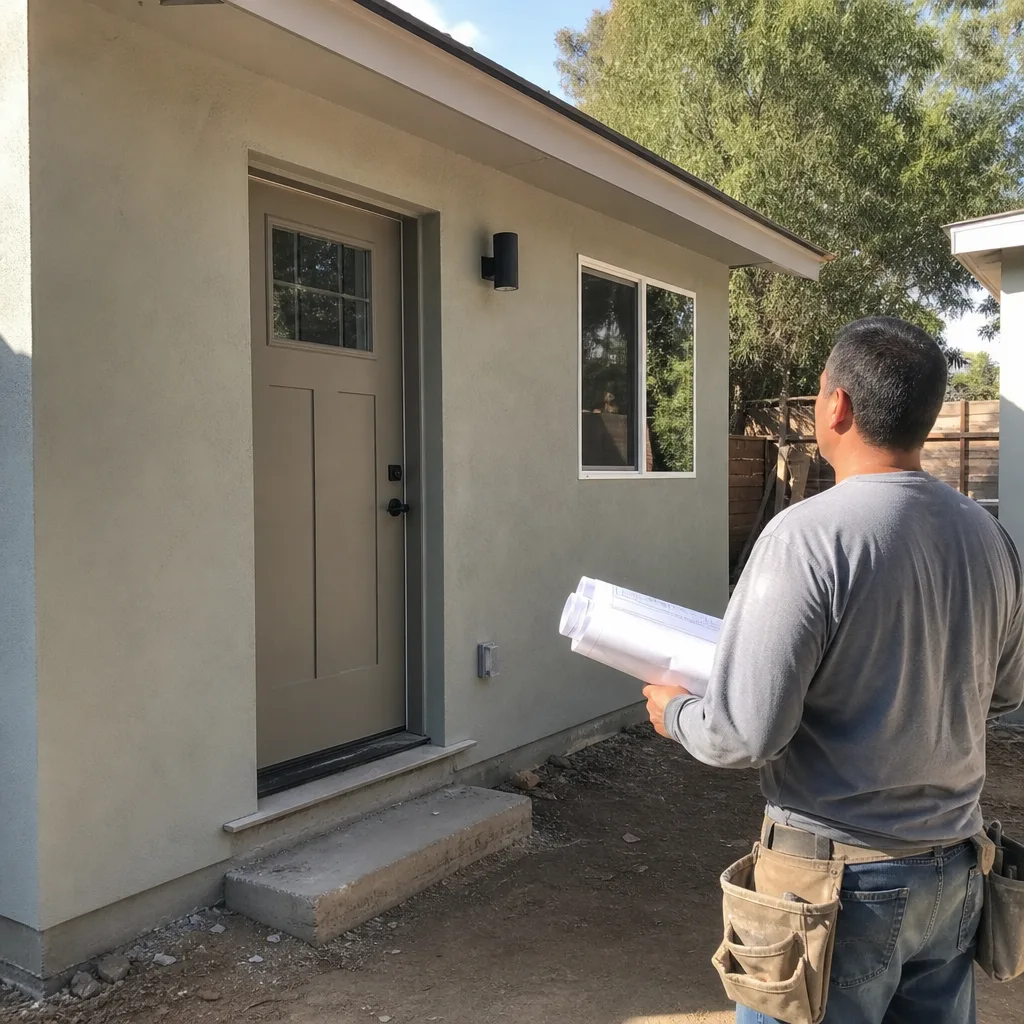
What we’re describing here isn’t a single part you can order from a catalog. It’s the underground and underslab work that determines whether your Plant Prefab unit sits level, drains properly, and powers up without frying a circuit. When that work fails, the symptoms show up fast, and the fix usually means opening ground again. That’s the expensive kind of lesson we’d rather help you avoid from the start.
Key takeaways:
- Santa Clarita site prep for Plant Prefab runs $18k – $45k installed, with utility trenching as the biggest variable.
- Plant Prefab units require specific pad tolerances and connection points that differ from Abodu, Cover, or Dvele builds.
- We carry the trenching specs and connection hardware on our trucks, so corrections happen in one visit, not three.
- You get a written price before any dirt moves, and our 365-Day Done Right Promise covers the work in writing.
Which Plant Prefab Models This Applies To
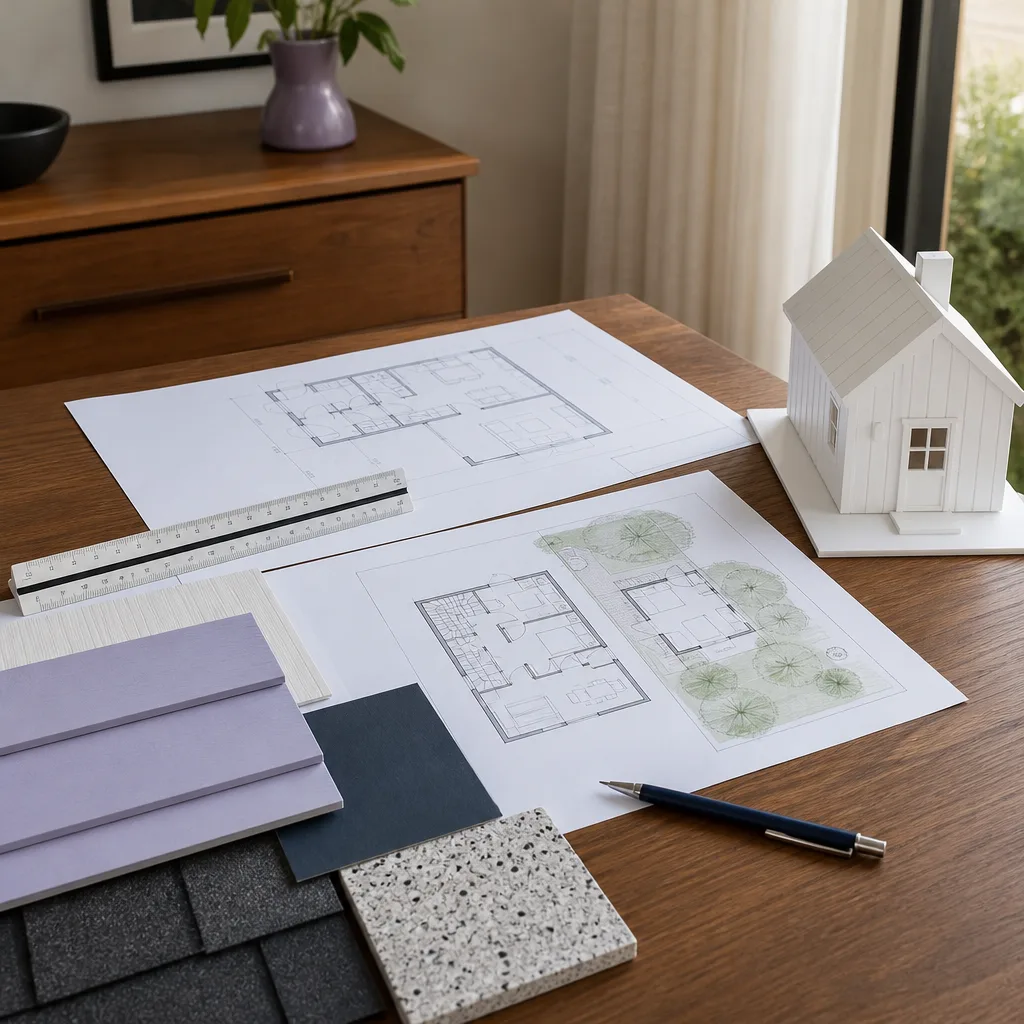
Plant Prefab builds their units in a factory, then ships them to your lot as panels or modules. That means the site work has to match the factory’s exacting connection points, not the other way around. Their current lineup includes the LivingHome series and the Plant ADU line, each with different pad dimensions, anchor bolt patterns, and utility stub-out locations. The critical gotcha we see in Santa Clarita: your sewer lateral depth and your water service pressure have to match the elevation Plant Prefab specs on their shop drawings, and we’ve watched contractors pour a pad to the wrong finished floor height because they never pulled those shop drawings from the homeowner’s permit packet.
Here’s the compatibility check that saves owners real money: locate the unit’s specification sheet (it ships with your purchase contract and is also available from Plant Prefab’s customer support). On it you’ll find the exact anchor pattern, the required pad slope tolerance (usually 1/8 inch per 10 feet for the LivingHome series), and the designated utility penetration locations. If your existing pad was poured for a different manufacturer, or for a site-built ADU, the anchor points won’t line up. That’s not a shim-and-go situation. You’re looking at either an engineered retrofit or a new pad section.
On the OEM-versus-aftermarket question for the utilities side: Plant Prefab doesn’t manufacture its own sewer laterals, water lines, or electrical conduit. What matters is that the materials meet or exceed Santa Clarita’s current building code (the 2022 California Plumbing Code and the 2022 California Electrical Code, both in effect as of January 2024). We spec Schedule 40 PVC for sewer, PEX-A for water supply, and THHN copper in rigid PVC conduit for the electrical feed, sized to the unit’s actual amp draw, not a guess.
Signs Your Plant Prefab Site Prep & Utilities Is Failing
- The unit sits low on one corner, or doors stick when the humidity shifts. That’s pad settlement, and it means the subgrade wasn’t compacted to spec, or the pad wasn’t poured with proper rebar and thickness. In Santa Clarita’s clay-heavy canyon soils, this shows up within the first two years if the compaction was skipped or rushed.
- Drains gurgle or back up in one bathroom while the other drains fine. Your sewer lateral is either bellied (dipped so water pools), back-pitched, or too small for the discharge volume. Tree roots from mature Santa Clarita oaks find sewer laterals within a few years if the joints weren’t properly sealed.
- Breakers trip when you run the mini-split plus a hair dryer. Someone undersized the electrical service or the subpanel feeder. A Plant Prefab ADU with a full kitchen and electric HVAC typically needs a 100-amp subpanel minimum, and many need 125 amps. If the main panel wasn’t load-calculated, you’ll feel it every summer afternoon when the AC surges.
- Water pressure drops to a trickle when the main house’s sprinkler system kicks on. The water line was tied into an existing hose bib line or an undersized branch instead of a dedicated 1-inch or 1¼-inch service from the meter. We see this constantly in older Santa Clarita neighborhoods where the original plumbing barely served the main house.
- The ground around the pad stays soggy, or you see cracks following the pad edges. Drainage wasn’t included in the site work. Without perimeter drains or proper swales, Santa Clarita’s winter rains saturate the subgrade and freeze-thaw cycles (mild here but still present in the high country) work the pad apart.
Replacement Cost & What’s Included
If your existing site prep or utility work has failed and needs correction, here’s what that costs in Santa Clarita, in plain dollar ranges, before you ever pick up the phone:
- Pad repair or partial re-pour: $4,500 – $12,000 depending on access, square footage, and whether demolition of the old pad is required.
- Sewer lateral replacement or re-grade: $3,800 – $9,500 depending on depth, length to the city main, and whether the trench runs under a driveway or patio.
- Water line replacement with dedicated 1-inch service: $2,200 – $4,800 depending on meter location and how much hardscape has to be cut.
- Electrical service upgrade and subpanel feed: $3,000 – $7,500 depending on main panel capacity, conduit run length, and whether SCE (Southern California Edison) has to touch the service drop.
- Drainage correction (swales, French drains, downspout tie-ins): $1,800 – $6,000 depending on grade and whether retention is required by the City’s stormwater ordinance.
Every one of those numbers is the installed price: materials, labor, equipment rental, and haul-off. You get a written line-item estimate before we start, and the price on that estimate is the price you pay. No change orders because the trench “ran longer than expected.” Our 365-Day Done Right Promise covers all of it. If the pad settles again in that first year, if the sewer line backs up, if the electrical feed underperforms, we come back and fix it at no charge. That’s in writing, stamped on your project folder.
DIY or Call Us?
Let’s be honest about what you can safely do yourself. You can check your main panel’s breaker amperage rating, walk the pad perimeter looking for cracks wider than 1/8 inch, and run a hose on your downspout to see where the water actually goes. Those are diagnostic steps, and they’ll help you understand what you’re looking at before you call someone.
What you should not do yourself: dig a trench across your front yard without a utility locate, cut into a sewer line you’ve partially excavated, or attempt to re-compact and re-pour any section of the pad. Hitting a gas line or an underground electrical drop will ruin your week, and potentially a lot more. Undersized electrical work on a 100-amp subpanel isn’t a handyman job either; a loose connection there becomes a fire hazard. We’ve corrected plenty of “saves” that ended up costing double what the original fix would have. Call (661) 219-7906 and we’ll walk the site, put the fix in writing, and tell you honestly what needs doing and what can wait.
FAQs
A properly compacted pad and correctly sloped sewer lateral should last the life of the unit, which for Plant Prefab builds we’d put at 50+ years for the structure and foundation. The electrical and plumbing components are where Santa Clarita’s hard water and summer heat take their toll: water heaters, pressure regulators, and breakers may need service every 10 to 15 years, but the underground work should be a one-time deal if it’s done right. Call (661) 219-7906 for a site evaluation if you suspect your underground work was never right.
Most pad settlement can be corrected with slab jacking or sectional replacement; a full tear-out and re-pour is only necessary when the original pour was so thin or so poorly reinforced that the pad is structurally compromised. The answer depends on what we find when we core-sample or expose the edge. We’ll tell you straight which path applies to your pad. Estimates are free.
Most single-item corrections (sewer lateral, water line, or drainage) take 2 to 4 working days from the first dig to final backfill and inspection. A partial pad replacement runs 5 to 7 working days including cure time before the unit is re-anchored. Electrical service upgrades depend heavily on SCE’s schedule for the service drop disconnect and reconnect, which in Santa Clarita typically adds one to three weeks. We’ll give you a written timeline with your estimate, and we hit it.
We keep the standard connection hardware, conduit, PEX, and sewer components on our trucks, sized to Plant Prefab’s current spec sheets. If your unit is an older LivingHome series with non-standard anchor patterns, we’ll source the correct hardware from our suppliers before the scheduled start date. You won’t be waiting on a mystery part three days into the job. Call (661) 219-7906 and we’ll confirm what’s on the truck for your specific model.
Get Your Free Estimate
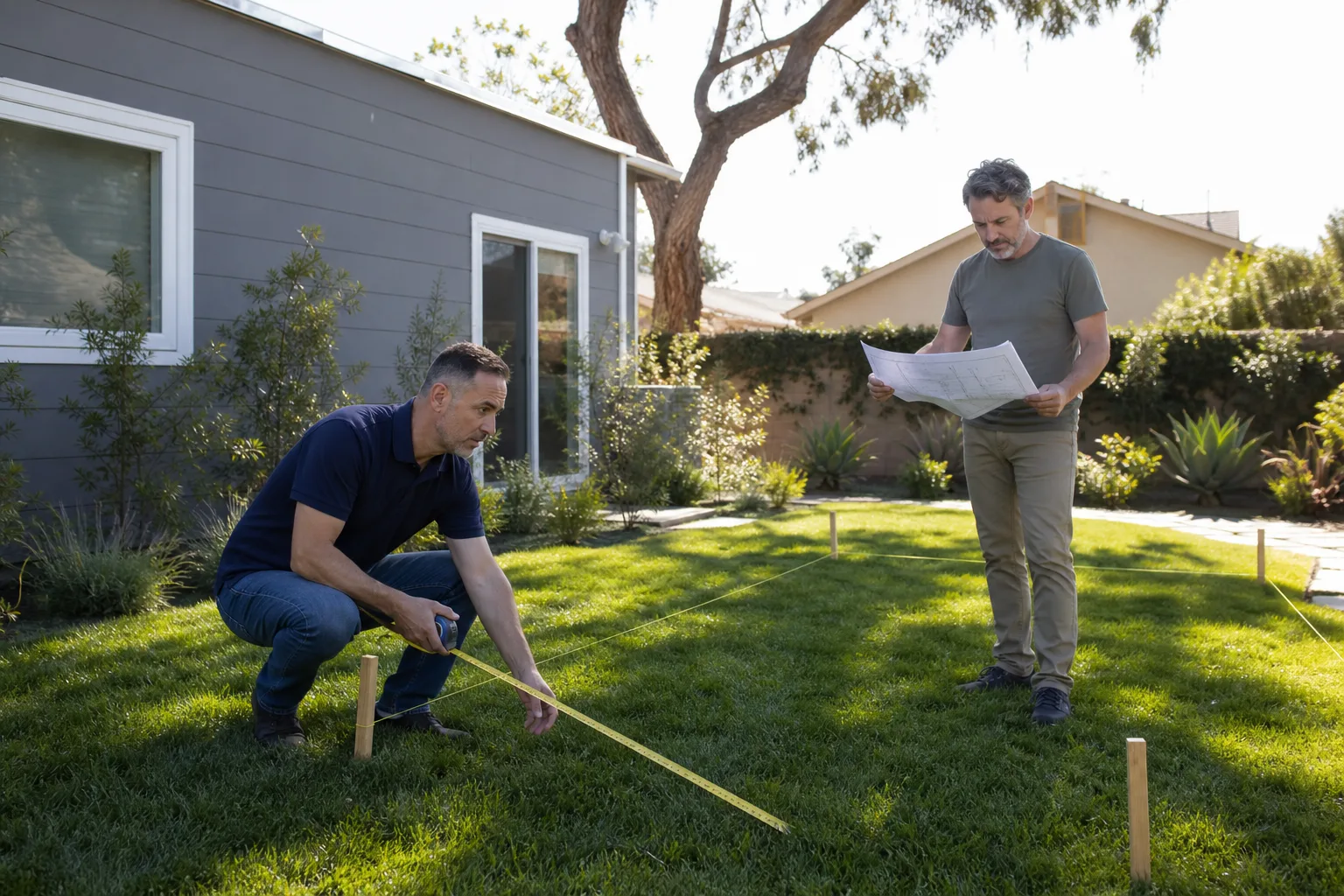
If your Plant Prefab pad is settling, your drains are slow, or your electrical service just can’t keep up, we’ll send a background-checked, uniformed technician to walk the site, take measurements, and give you a written price for the exact work. No verbal ballpark, no pressure, no surprises. Price it in writing, build it right, no surprises, that’s the whole job.
Call (661) 219-7906 to schedule your free estimate. A live person answers, day or night.
Written by Troy Eastman, Owner & Lead Builder, Benson ADU Santa Clarita at Benson ADU Santa Clarita, serving Santa Clarita and nearby areas.