Tuff Shed Site Prep & Utilities: The Santa Clarita Owner’s Guide
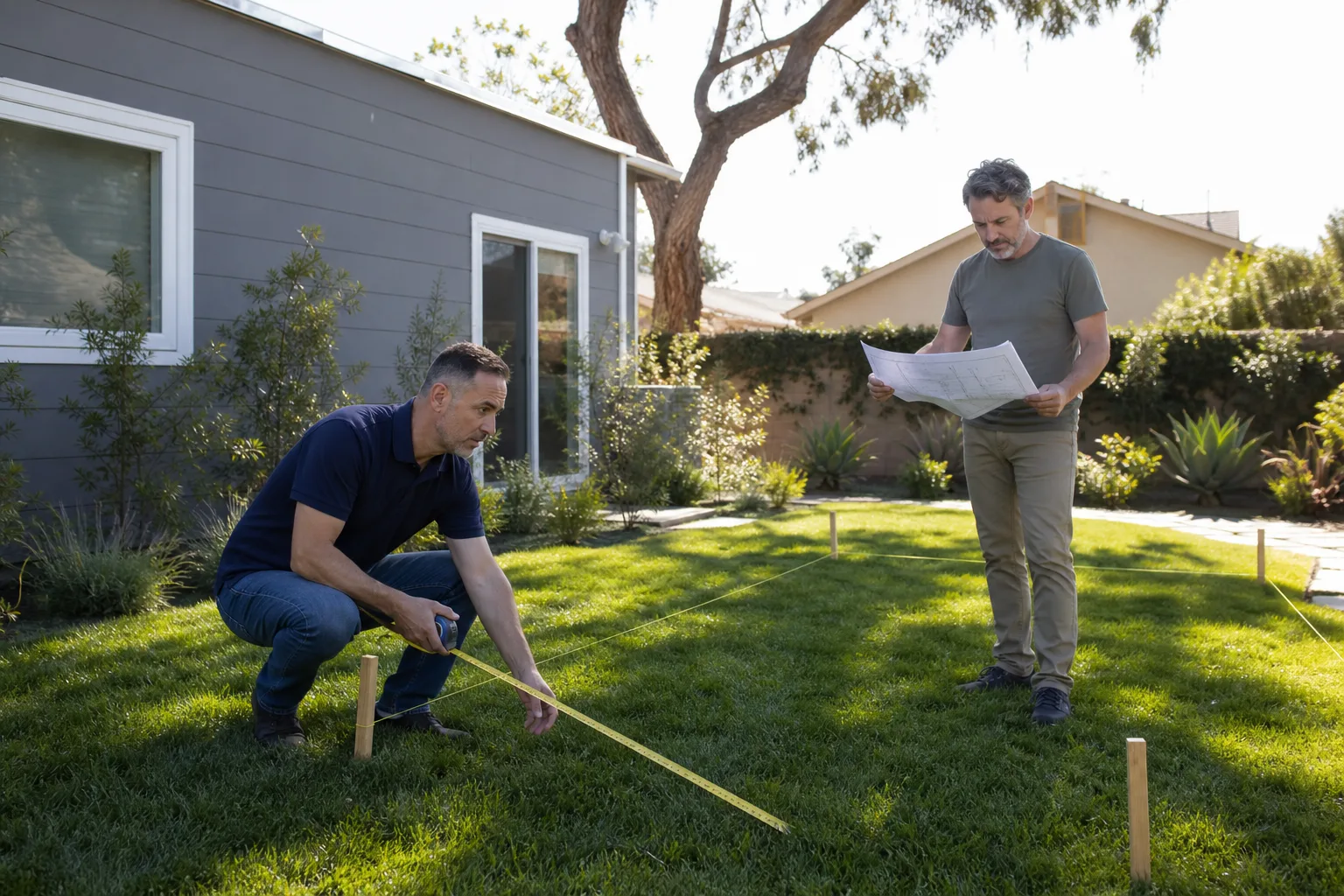
If your Tuff Shed needs site prep or utility rough-in work, you’re looking at an installed range of roughly $1,800 to $6,500 in Santa Clarita, depending on slope, soil conditions, and how deep the utility runs need to go. Most site prep jobs take one to three days once we have the permit in hand, and we stock the common hardware on our trucks so we’re not making three trips to a supply yard. The usual way owners discover this problem: the shed company drops off the building, sets it on blocks, and then someone notices water pooling under the floor, a door that won’t close square, or a corner that’s already sinking into soft ground. Tuff Shed builds a solid product, but the structure is only as good as what’s under it.
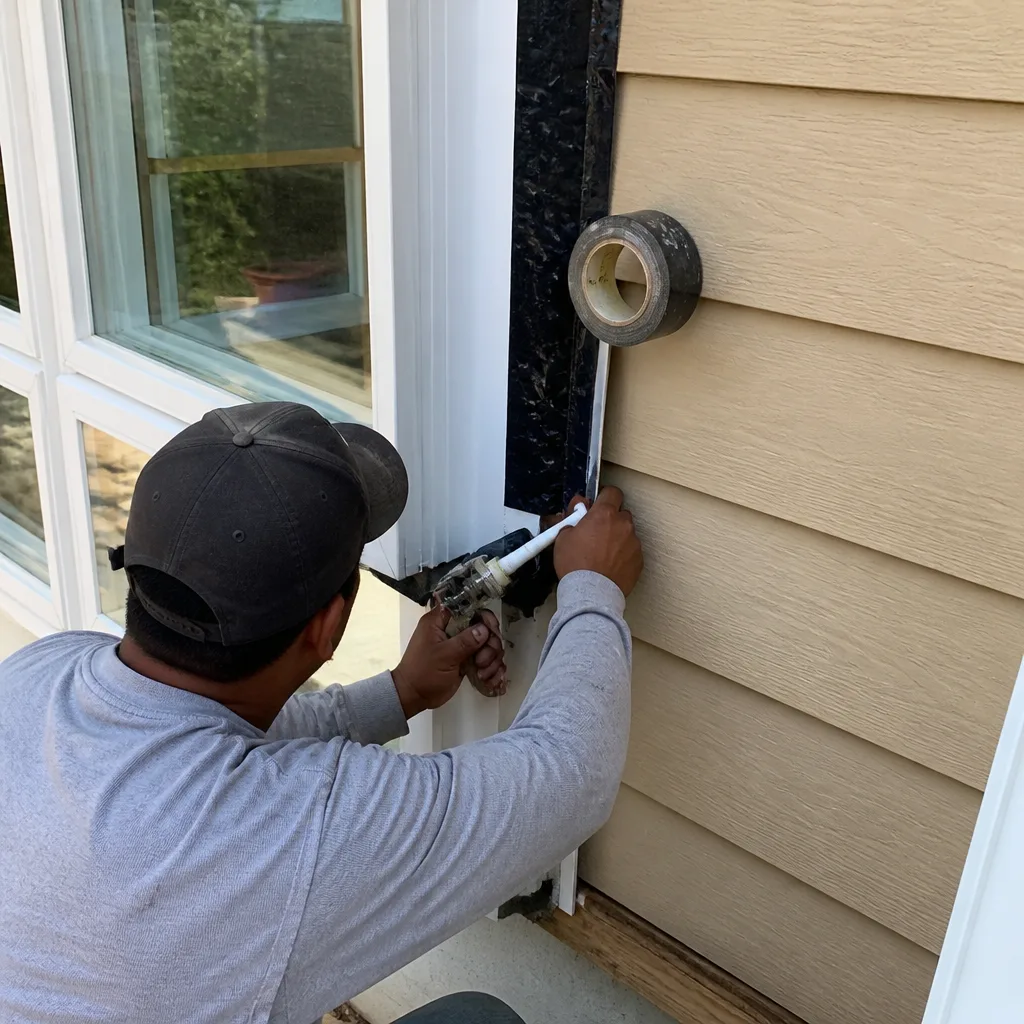
A quick note before we go further: Benson ADU Santa Clarita is an independent contractor. We’re not affiliated with Tuff Shed, but we prep sites for their buildings all the time and we know exactly what their install teams need to see on delivery day.
Which Tuff Shed Models This Applies To
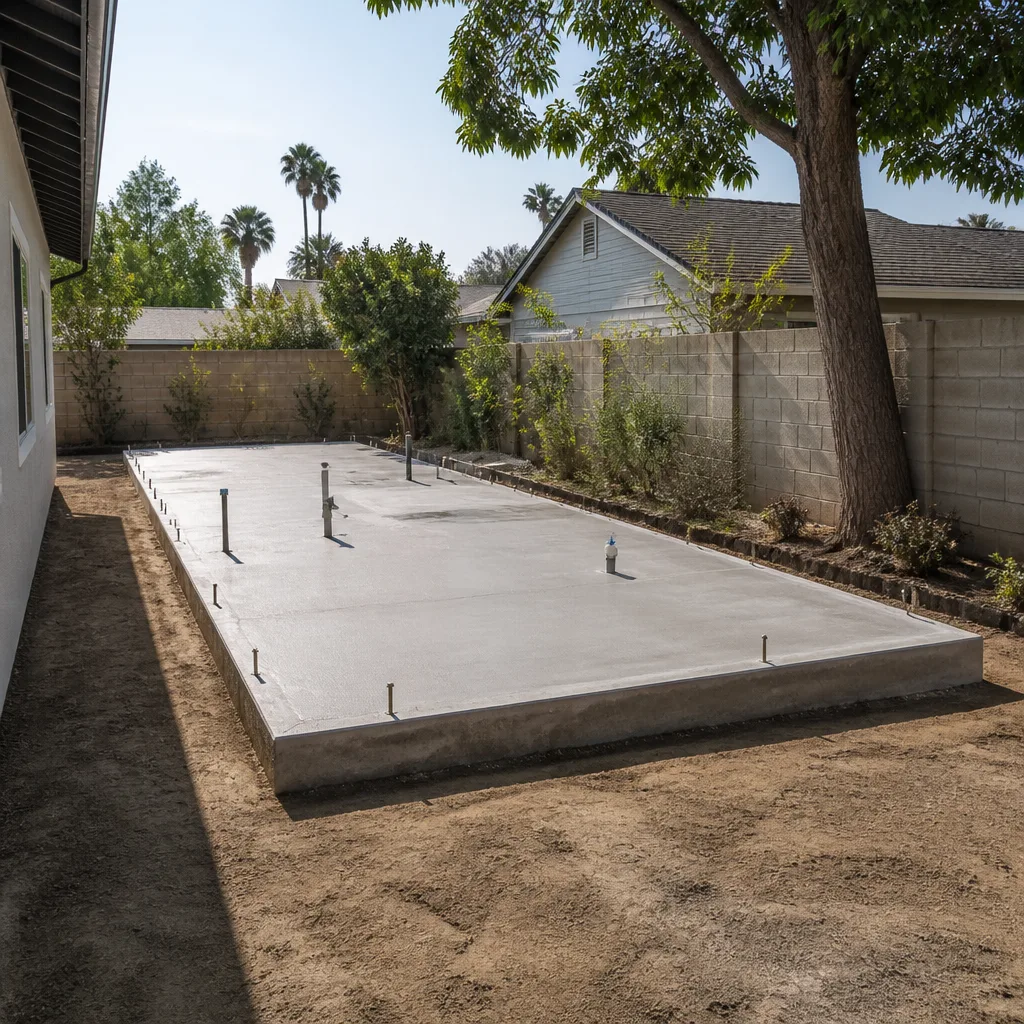
Site prep and utility work applies to every Tuff Shed line sold in the Santa Clarita area, but the prep requirements shift depending on the model. The Premier PRO and Premier Tall Barn series are the most common ones we see used as workshops or storage spaces, and those sit on a standard perimeter block foundation or a poured concrete pad. The Sundance series leans more residential, often used as a backyard office, and those typically need a level gravel pad with proper drainage at minimum. Any model with a floor system, whether it’s a PRO series or a lean-to, needs the ground under it to be graded and compacted. A shed set on unlevel ground will always fight its own frame, and that’s where doors start binding and siding seams start pulling apart.
When you’re identifying what your specific site needs, look at the metal ID tag on the back gable or inside the door frame. It lists the model series and the exact footprint. We match prep specs to that footprint, not to a guess. For the utilities side, we’re running conduit for electrical, sleeving for future data lines, and sometimes a water line stub if the shed doubles as a workspace. The OEM-vs-aftermarket decision here isn’t really about parts, it’s about method: Tuff Shed’s install teams have their own approved foundation methods, and our prep work is designed to meet or exceed those specs so there’s no red flag when the delivery truck shows up.
Signs Your Tuff Shed Site Prep & Utilities Is Failing
Most failures show up within the first full rain season. Here’s what we see in Santa Clarita, and what each symptom actually means:
- Water pooling under or around the shed after rain. This usually means the pad or gravel base wasn’t sloped away from the structure. In Santa Clarita’s clay-heavy soils, water sits instead of draining, and that constant moisture works on your floor joists from below.
- A door that binds at the top corner or won’t latch. The shed has settled unevenly. One corner has dropped, which torques the frame. Fixing the door won’t fix the cause; you’ll be adjusting that door forever until the base gets leveled.
- Visible sinking at one corner, with gaps opening under the floor edge. Soft or uncompacted soil is giving way. We see this a lot in the newer developments on the east side of town where fill dirt wasn’t left to settle long enough before owners started adding structures.
- Electrical outlets in the shed that trip breakers or read low voltage. The conduit run was undersized, or the wire gauge wasn’t matched to the distance from your main panel. In Santa Clarita’s summer heat, resistance on long runs adds up fast and we see voltage drop issues on sheds set more than 75 feet from the house.
- The shed floor feels bouncy or soft in spots when you walk across it. The blocking under the floor system has rotted, shifted, or was spaced too far apart from the start. A floor system needs support every 16 to 24 inches depending on the series, and shortcuts here show up within a year or two.
If any of these sound familiar, the fix usually starts under the shed, not inside it. That’s a prep and utility problem, and it’s exactly what we address before it gets worse.
Replacement Cost & What’s Included
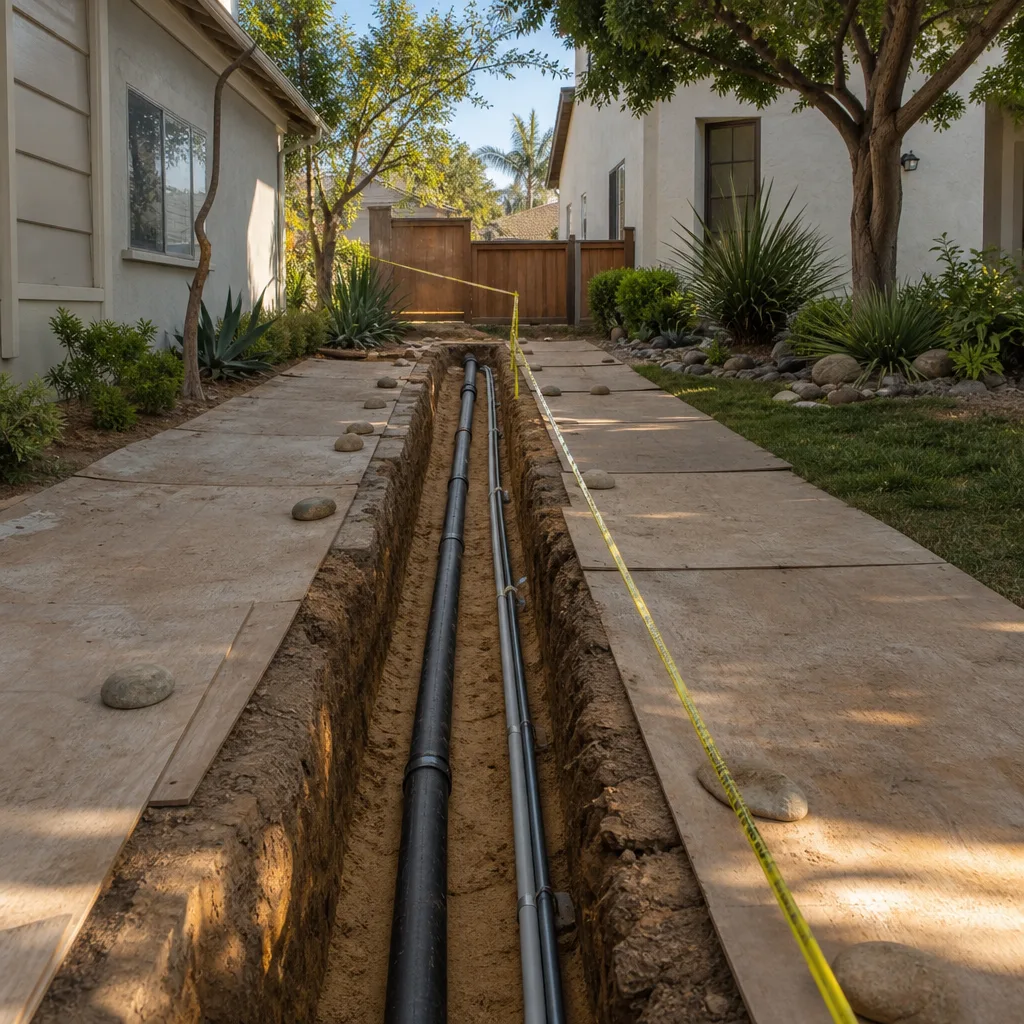
For Santa Clarita homeowners, here’s the honest pricing picture based on the job type:
- Basic gravel pad prep for a small to mid-size Tuff Shed (8×10 to 10×12): $1,800 to $3,200. This includes excavation, compaction, drainage correction, and a compacted gravel or decomposed granite base.
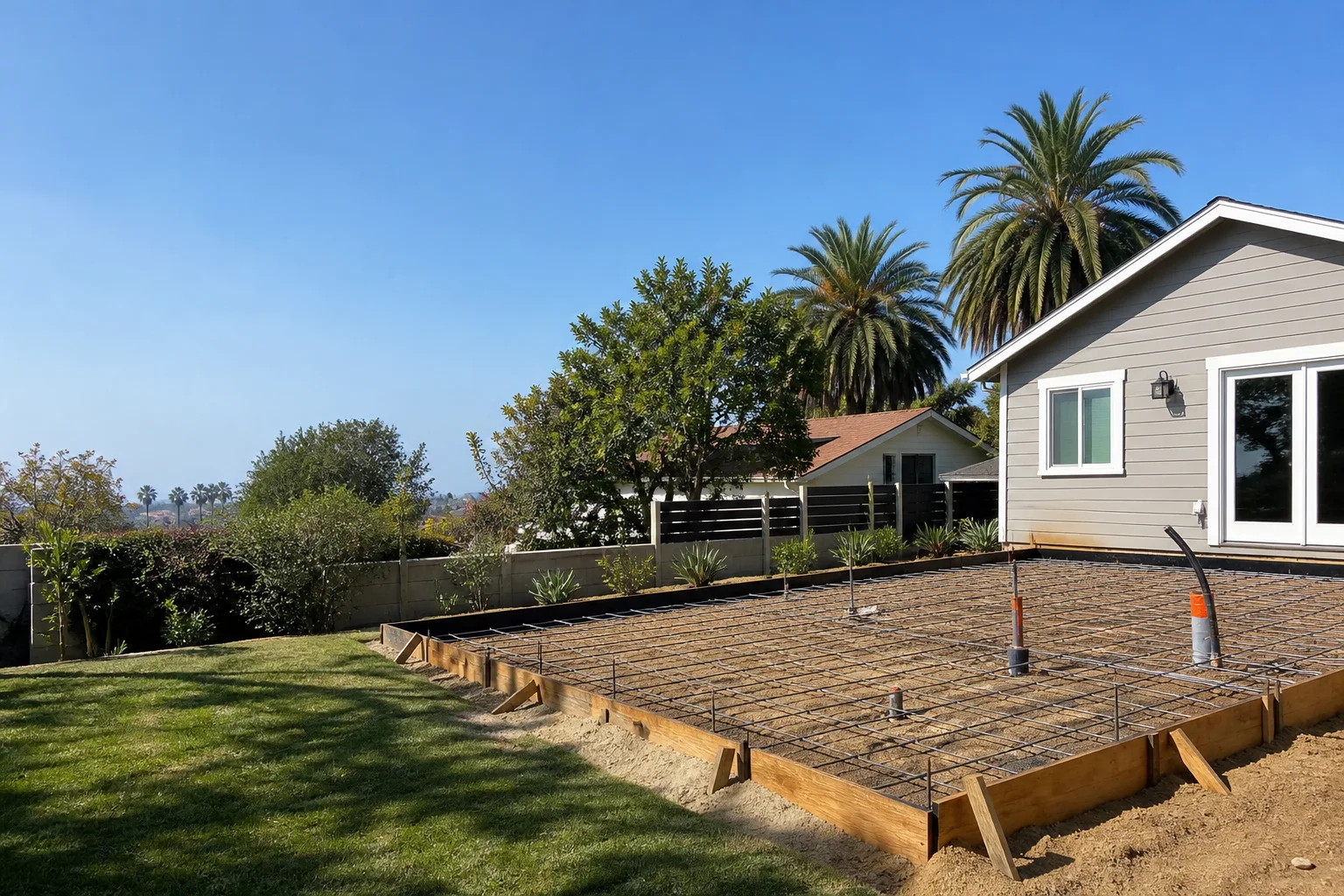
- Concrete pad prep for larger models or sloped lots (12×16 and up): $3,500 to $6,500. This covers form work, rebar, the pour, and a proper slope away from the shed footprint. Santa Clarita lots with any real grade change land in this range.
- Utility rough-in for electrical (conduit run, panel connection, outlet stubs): $900 to $2,800 depending on distance from the main panel and whether trenching crosses any hardscape. Water line stubs add $600 to $1,500.
What drives the range is the dirt, not the shed. Rock, root systems, and hillside access all push labor time up, and we always walk you through exactly what we found before we quote. Every quote is a written, line-item price before we start, and it doesn’t change at the door. Our workmanship warranty on prep and utility work follows our 365-Day Done Right Promise, same as everything else we build.
DIY or Call Us?
There are a few things you can safely check yourself: stick a level on the shed floor and note which way it tips, look for standing water after rain, and check whether your electrical outlets are holding steady voltage with a basic meter. What you don’t want to tackle yourself is re-leveling a loaded shed, trenching for electrical, or doing anything with a main panel connection. Utility rough-in in Santa Clarita requires permits and inspections, and a mistake there isn’t a cosmetic issue, it’s a fire hazard or a shock risk. Same goes for re-compacting soil under an existing structure: if a jack slips or a block kicks out while the shed is lifted, you’re dealing with a dropped building and a real injury risk.
If you want us to look at your site and tell you honestly what it needs, call (661) 219-7906. The site walk and estimate are free, and you’ll get a written price, not a handshake and a hope.
FAQs
A properly compacted and drained base in Santa Clarita should last the life of the shed, typically 20 to 30 years, with the caveat that our clay soil expands and contracts with moisture, so drainage maintenance matters more here than in coastal areas. The electrical portion should last indefinitely if the conduit and wire were sized correctly at install. Call (661) 219-7906 if you’re seeing settling or electrical issues, and we’ll give you an exact diagnosis.
In most cases, we can repair it without removing the shed by lifting and re-supporting the structure, then rebuilding the base beneath it. If the pad itself is cracked and heaving from soil movement, a partial or full re-pour may be necessary. We’ll tell you which one you need after we see it.
Standard gravel or concrete prep takes one to three days on site, with concrete needing an additional three to five days of cure time before the shed can be delivered or re-set. Electrical rough-in typically adds one day if trenching is straightforward. We’ll give you a schedule in writing before we start.
Yes, we carry the common materials on our trucks: compaction gravel, conduit in standard sizes, pressure-treated blocking for floor support, and minor electrical supplies. Anything unusual gets ordered ahead of time so the install day isn’t a scramble. We also work with Tuff Shed, Abodu, Cover, and Dvele structures, so our crews have seen nearly every foundation condition these brands present.
Written by Troy Eastman, Owner & Lead Builder, Benson ADU Santa Clarita at Benson ADU Santa Clarita, serving Santa Clarita and nearby areas.